

 Ask us whether winter is a good time to fish the White River, and you might want to pull up a chair. We have quite a bit to say about that.
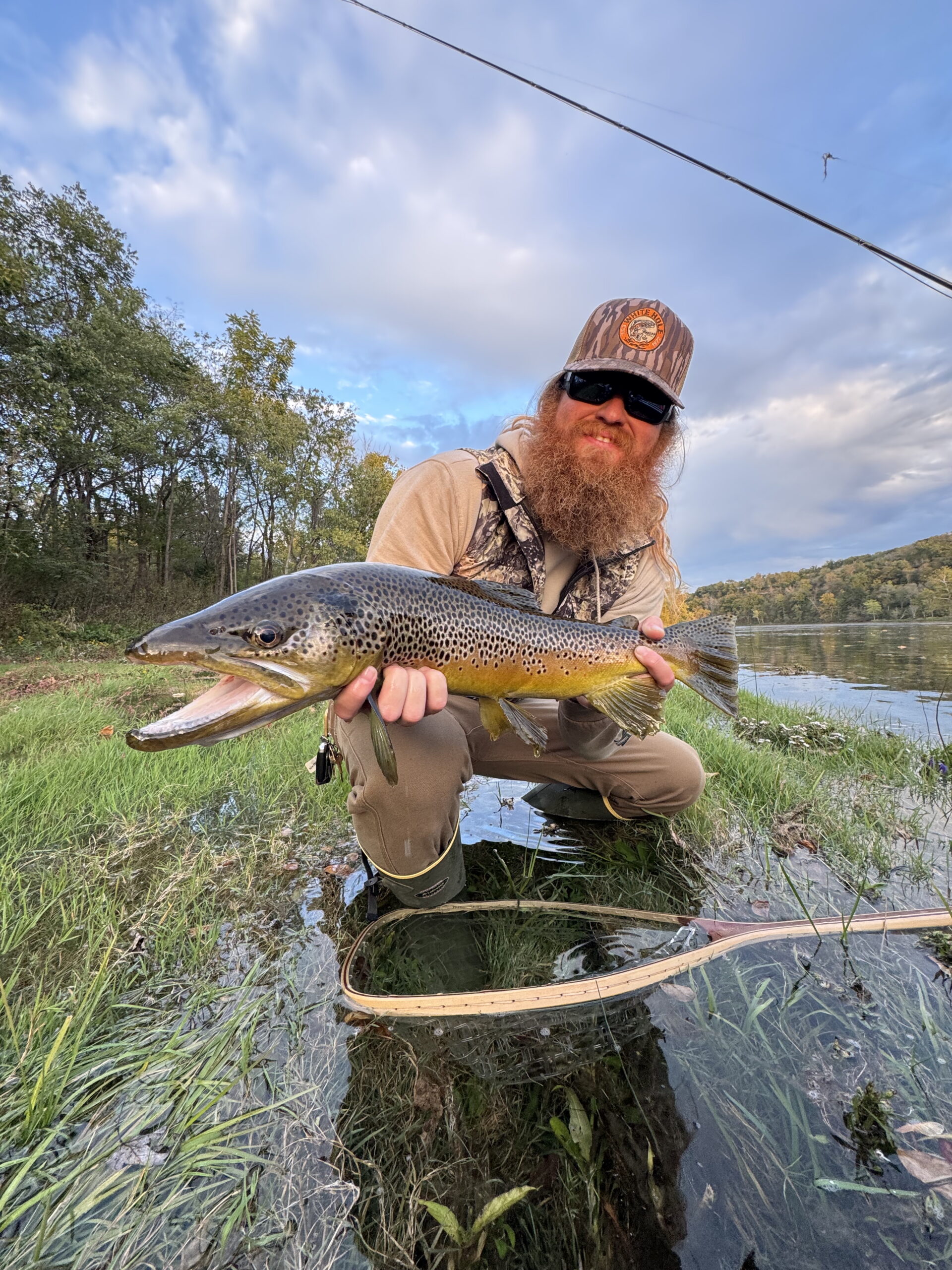
Some of the biggest brown trout we see caught come during the colder months. There’s excellent rainbow fishing, too, and early winter offers something that’s harder to find during the busy season: a little more room on the river.
At White Hole Resort, we’re open year-round, with riverfront cabins, boat rentals, an on-site angler pro shop, and fishing guides who live right here on the property. From November 15 through the end of February, we also offer 20% off cabin rentals with a two-night minimum.
But a successful winter fishing trip involves more than choosing a date and packing a warm jacket. Here’s what we’ve learned about winter trout fishing on the White River, from the best times to target big browns to the tackle, water conditions, and fishing opportunities worth planning around.
When is the best time for winter trout fishing on the White River?
There’s good fishing throughout winter, but the experience changes considerably between November and March.
| Time of year | What to expect |
|---|---|
| November–December | Quieter water, good rainbow fishing, and brown trout spawning activity |
| January | Increasing opportunities to target post-spawn brown trout, particularly later in the month |
| February | Excellent potential for larger browns, with more anglers returning to popular stretches |
| March | Continued post-spawn feeding opportunities as the river moves toward spring |
If your priority is a peaceful fishing getaway, November, December, and early January are particularly appealing.
If you’re coming specifically to pursue a trophy brown trout, we’d pay closer attention to January and February, when post-spawn feeding activity can create some exciting opportunities.
Neither approach is necessarily better. It depends on what you want from your trip.
Why big brown trout are worth chasing in winter
As brown trout finish spawning, they begin feeding more aggressively to replenish their energy reserves. Sculpins, river minnows, and even smaller rainbow trout can become substantial meals.
That makes January and February especially interesting for anglers fishing large streamers and jerkbaits. With the right water flows, browns may move toward the banks to feed, giving us opportunities to work those presentations through promising water.
You can catch a trophy brown any time of year, but winter gives us a feeding pattern we particularly look forward to.
Earlier in the season, spawning fish may have narrower feeding windows. On a four- or five-day visit, you might experience a day or two of strong brown trout activity with tougher fishing in between. Meanwhile, there can still be excellent opportunities to catch quality rainbows.
We also believe in protecting the fish that make this river special. Give actively spawning trout room, avoid disturbing their gravel nests (called redds), and follow the seasonal fishing regulations established by the Arkansas Game and Fish Commission.
The Bull Shoals Dam catch-and-release area: What to know about the February opener
Every winter, anglers start talking about the February reopening of the catch-and-release area below Bull Shoals Dam.
There’s good reason for the interest. Brown trout move into this part of the river to spawn, and the area can offer excellent fishing as those fish begin feeding afterward.
But there’s something else worth knowing: it can get awfully crowded.
When does the catch-and-release area reopen?
The seasonal spawning closure below Bull Shoals Dam runs from November 1 through January 31.
During the closure, fishing and wading are prohibited from 100 yards below the dam downstream to the wing dike at the Bull Shoals White River State Park trout dock. The restriction applies to everyone, including fishing guides.
Fishing reopens February 1.
The regular catch-and-release area extends from 100 yards below the dam to the posted upstream boundary of Bull Shoals White River State Park. This is a different boundary from the larger seasonal closure area.
The first 100 yards below the dam remain off-limits to fishing, boating, and wading year-round.
What tackle is allowed in the catch-and-release area?
Within the designated catch-and-release area:
- All trout must be released immediately.
- Only artificial lures and flies are permitted.
- Every hooking point must be barbless.
- Natural bait, scented bait, and chumming are prohibited.
That means leaving nightcrawlers, live minnows, PowerBait, and other scented baits for stretches where they’re permitted.
Jerkbaits with treble hooks can be used, provided every hooking point is barbless. If your hooks have barbs, you can carefully flatten them with pliers, making sure each point is properly crimped. Manufactured barbless hooks are another option.
Not sure whether your tackle meets the requirements? Stop by our pro shop and we’ll be happy to help.
Is the February opener worth fishing?
It certainly can be. But the first week of February can bring boat after boat drifting through the same short stretch of river.
Personally, we often prefer to fish elsewhere during that opening rush.
There’s good water throughout the White River, and sometimes a less crowded stretch makes for a better day than joining dozens of boats near the dam.
We’d rather choose our fishing water based on the conditions and what you’re hoping to catch than head straight for the busiest spot simply because it just reopened.
If fishing the catch-and-release area is on your list, let us know. We’ll help you decide whether it makes sense for your trip.
Important: Fishing regulations vary by river section and can change. Check the current Arkansas Game and Fish Commission fishing regulations and posted boundaries before fishing.
What we’re fishing with during winter
Winter trout fishing on the White River offers plenty of opportunities for both fly anglers and bait and spin fishermen.
The right approach depends on water levels, weather, and what the fish are doing, but these are some of our winter favorites.
Winter fly fishing: Midges, eggs, worms, and streamers
Egg patterns paired with a midge dropper are a reliable winter combination. Worm patterns are useful, too, particularly when the river is carrying more water.
As the post-spawn feeding period develops, we become increasingly interested in larger streamers that imitate sculpins, minnows, and other fish.
Higher flows can create opportunities to work those bigger presentations along the banks. In lower water, we may slow things down, using smaller flies and carefully fishing individual pockets and runs.
You don’t need to buy every fly in the shop before arriving, either. We’ve recently expanded our fly inventory in the White Hole Resort pro shop, and we’re always happy to talk about what’s working.
Winter bait and spin fishing
PowerBait eggs, beads, and nightcrawlers are all useful winter options in sections where they’re allowed.
Mice tails can be especially productive around the lodge, while sculpins and river minnows may become more interesting options for targeting post-spawn browns in late January and February.
Don’t overlook small marabou jigs and spoons, particularly during the lower-light periods early and late in the day.
Of course, bait restrictions vary along the river, so check the regulations for the stretch you plan to fish.
How winter water levels affect fishing
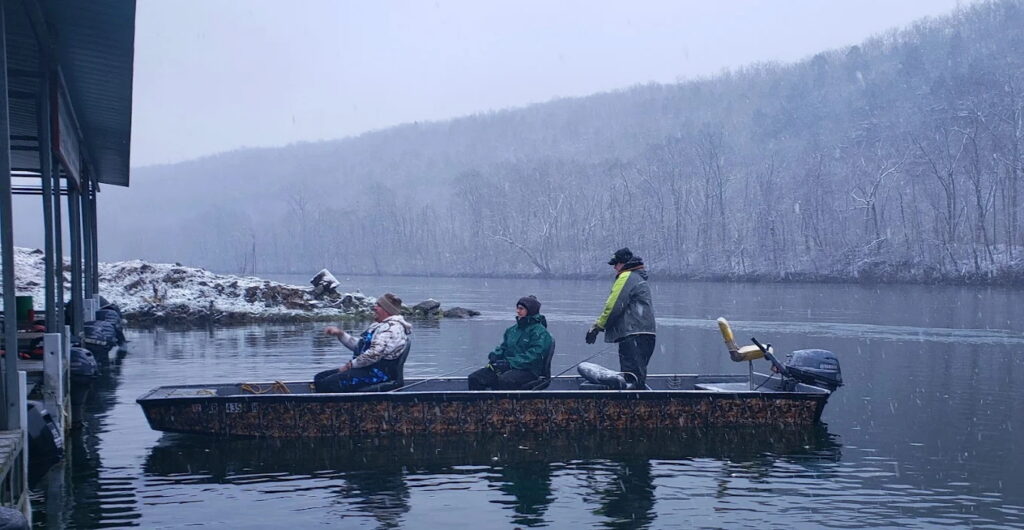
The White River below Bull Shoals Dam is a tailwater fishery, which means water releases from the dam have an enormous influence on fishing conditions.
We pay attention to lake levels, recent rainfall, and hydroelectric generation demand when planning a day on the river.
When lake levels are low and releases primarily serve power-generation needs, cold weather can influence when and how much water is released.
During milder periods, we may see generation in the morning, evening, or overnight, with less water moving through the warmer part of the day. During sustained cold weather, increased heating demand can lead to longer periods of generation.
Those are patterns, not guarantees. Rainfall, flood-control operations, and changing power needs can alter the schedule.
Water released at the dam also takes time to travel downstream, so conditions at White Hole Resort won’t necessarily match what you’re seeing immediately below Bull Shoals Dam.
We recommend checking the Southwestern Power Administration generation information before fishing and talking with us about what the river is actually doing near the lodge.
A word about safety: Water levels can rise quickly, even when a shoal appears calm. Never assume low water will remain low, and get local guidance before wading.
Sometimes the best winter fishing day comes in two parts
Brown trout often feed most actively during periods of low light.
That’s why, under the right conditions, we particularly like fishing the first and last few hours of daylight.
If those periods coincide with useful water flows, it can be worth organizing your day around them rather than staying out through a slower midday bite.
For anglers pursuing larger browns, Bailey or James may recommend a split-day guided fly fishing trip.
The idea is simple: spend the first two or three hours of daylight fishing, return to the lodge for a break, then head back onto the river for the final two or three hours of the day.
You get time to warm up, have something to eat, and return to the water when conditions may be more favorable.
Because our in-house fly fishing guides live onsite, it’s easy to have those conversations and make a plan around your stay.
Split-day trips need to be arranged in advance and depend on guide availability and fishing conditions. If you’re interested, ask us what’s possible for your dates.
What about night fishing?
Night fishing can be another interesting option for anglers targeting post-spawn brown trout, particularly between January and March.
On milder nights with appropriate flows, fishing after dark can be productive.
When temperatures drop below freezing, however, things get considerably more complicated. Fly lines can freeze to the boat, rod guides ice over, and wet hands become uncomfortable very quickly.
Managing all of that in the dark takes experience.
If night fishing interests you, talk with Bailey or James about arranging a specialized guided outing under suitable conditions. Our rental boats are for daylight use.
How many days should you plan for a winter brown trout trip?
If you’re coming specifically to chase big brown trout, we recommend planning three fishing days if you can.
Two days can certainly be productive. But three gives you a better chance of encountering the right combination of water flows, cloud cover, and feeding activity.
It also gives your guide more flexibility to adjust the approach as conditions change.
No particular day comes with a promise of a trophy fish. Spending a little more time on the river simply gives us more opportunities to work with what nature provides.
When you’re arranging your trip, think in fishing days as well as cabin nights. We’ll help you work out a schedule that makes sense.
Winter fishing right at White Hole Resort
One of the nicest things about staying at White Hole Resort is that you don’t have to go far to find good trout water.
There’s productive fishing right along our riverfront, including the shoal near the resort, deeper water below it around our dock, and a deep hole along the stretch between our dock and the neighboring public access.
Fish can hold in those deeper areas below the shoals, making them well worth exploring.
From the bank, egg presentations, mice tails, and nightcrawlers are useful starting points where permitted. Depending on the water and your tackle, you might also drift egg or worm presentations, fish a midge dropper, or work a small jig or spoon during low-light periods.
And if you’re not sure where to begin, just come ask us.
We’d much rather point you toward productive water than have you spend your morning guessing.
 Bring your waders if you have them
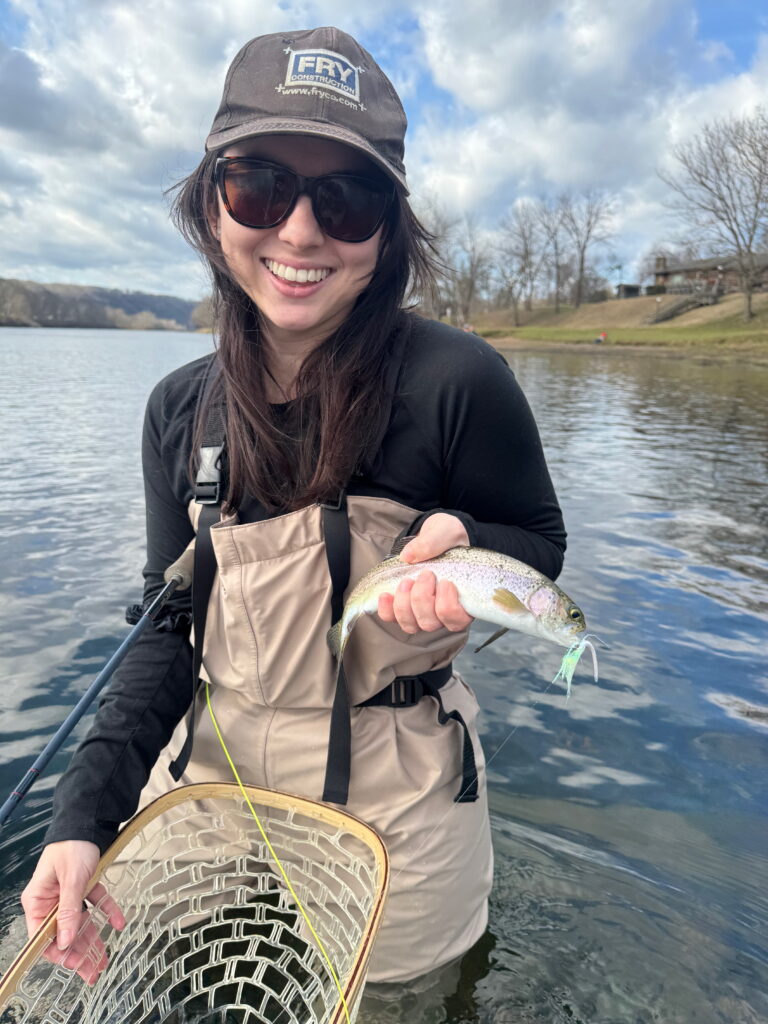
During suitable low-flow conditions, wading can be one of the most enjoyable ways to fish the White River in winter.
There’s something special about stepping into a quiet stretch of river and taking your time with the water in front of you.
We’re also exploring opportunities to incorporate guided wading into some of our boat-based fly fishing trips.
Instead of repeatedly drifting through a shoal, a guide may be able to secure the boat and work the water on foot with you.
That allows you to slow down and carefully fish individual pockets and runs that you might otherwise pass in seconds.
If that sounds appealing, mention it when arranging your guided trip.
Bring your own waders and appropriate wading footwear if you have them, as waders aren’t included with our guided fly fishing equipment. Wading is always subject to suitable water conditions.
Should you bring your own boat, rent one, or hire a fishing guide?
There are several ways to enjoy the White River during a winter visit.
If you have your own boat, you’re welcome to bring it and launch at the White Hole Public Access immediately next door.
We also offer boat rentals for anglers who prefer to explore independently.
But if you’re unfamiliar with the river, or hoping to concentrate on a particular kind of fishing, a guide can make a meaningful difference.
Perhaps the biggest practical advantage is that somebody else handles the boat while you concentrate on fishing.
Your guide also brings firsthand knowledge of the river’s changing conditions, productive locations, and techniques that make sense for the day.
That’s particularly valuable in winter, when a water release, cold front, or short feeding window can change the plan.
We offer both guided fly fishing and guided bait and spin fishing, with equipment provided. Ask about trip inclusions and lunch arrangements when booking.
If you plan to keep any fish, check the current harvest regulations first. We can also assist with cleaning fish that may legally be kept.
 What to wear for winter fishing on the White River
Arkansas winter weather can keep you guessing.
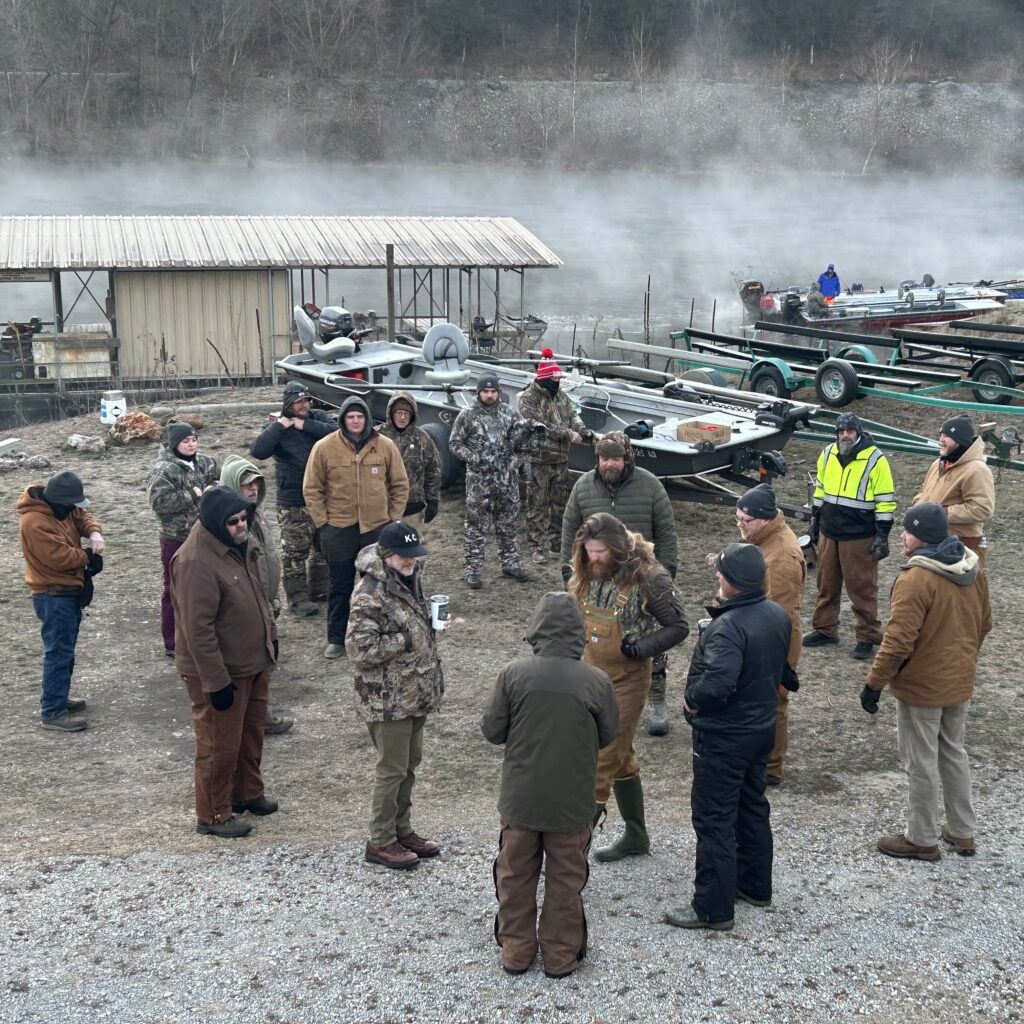
We’ve seen beautiful winter afternoons with temperatures in the 60s and 70s, along with cold snaps that bring single-digit nights and days that struggle to climb above freezing.
The best strategy is to dress in layers and prepare for changing conditions.
Here’s what we’d bring:
- Moisture-wicking base layers: Wool blends and other insulating fabrics help keep moisture away from your skin.
- An insulating middle layer: Fleece or a similar warm layer provides protection against the cold.
- A waterproof, windproof outer layer: Particularly important when you’re riding in a boat.
- Warm socks and waterproof footwear: Cold, wet feet can ruin a fishing trip in a hurry.
- Hat, gloves, and hand warmers: Small comforts that make a big difference.
- Sunglasses and spare dry clothing: Useful even on cloudy winter days.
- Proper wading equipment: Essential if you’re planning to enter the river.
Bring rain gear even if the forecast looks clear. Morning fog, damp conditions, and cold boat rides can leave you thoroughly chilled before you’ve made many casts.
And don’t feel obligated to tough it out if you’re uncomfortable.
Sometimes the best thing you can do is come in, get warm, eat something, and head back out refreshed.
We’ll have coffee going at the lodge during winter, and you can arrange lunch with us ahead of time.
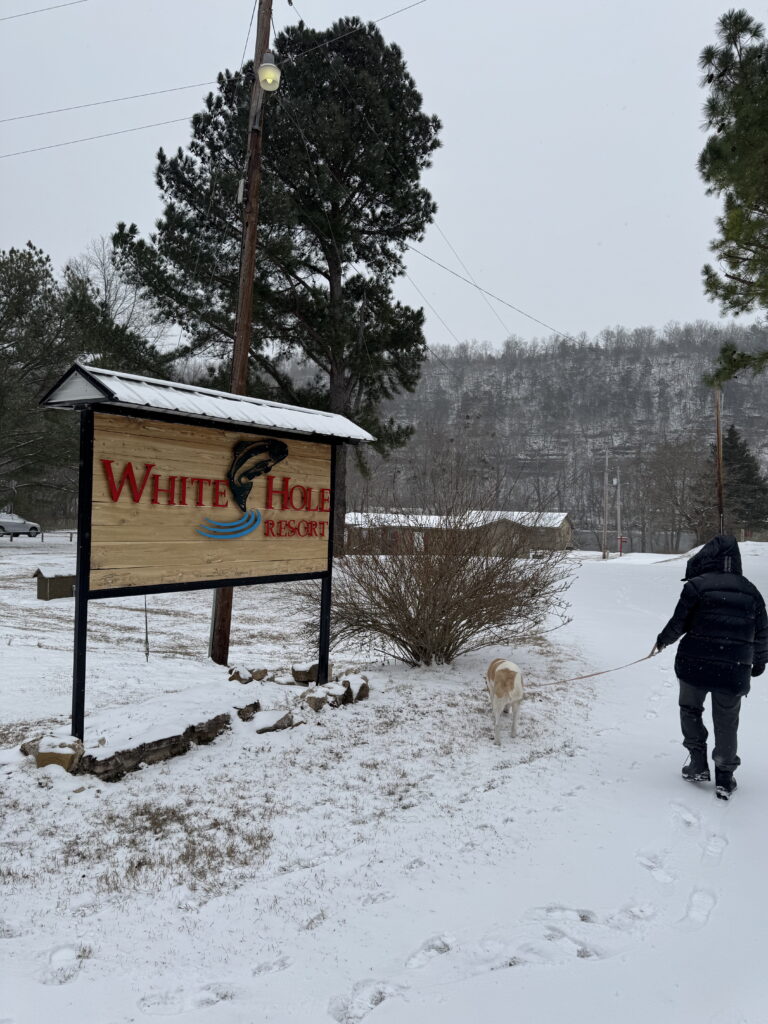 Make White Hole Resort your home base for winter fishing
Winter fishing is even better when you’ve got a comfortable place to come back to.
At White Hole Resort, our riverfront location makes it easy to get onto the water, take a break when you need one, and head back out when conditions improve.
Our one-, two-, and four-bedroom cabins accommodate everyone from couples planning a quiet getaway to groups of fishing buddies. Each has a full kitchen, so you can settle in and enjoy a warm meal after a day on the river.
With onsite fishing guides, boat rentals, a stocked pro shop, and fishing opportunities right along the property, there’s no need to spend your whole trip driving between your cabin and the river.
We stay open year-round. If winter weather is forecast for your arrival dates, give us a call about local road and property conditions before traveling.
Save 20% on your winter cabin stay
From November 15 through the end of February, we’re offering 20% off cabin rentals with a two-night minimum.
It’s a great opportunity to enjoy a quieter stretch of the White River, spend a few days pursuing winter trout, and experience the river during one of our favorite times of year.
Let’s plan your winter White River fishing trip
Whether you’re looking for a relaxing couple of days catching rainbows or hoping to connect with a big post-spawn brown, we’d love to help you put together a trip.
Give us a call at (870) 453-2913 or contact us online.
Tell us when you’re thinking about coming, how many people are joining you, and what kind of fishing interests you most.
We’ll help you talk through the conditions, choose the right cabin, and arrange guides or boat rentals if you’d like them.
And don’t forget to mention our winter cabin discount when making your reservation.
Bring your questions. We’re always happy to talk fishing.